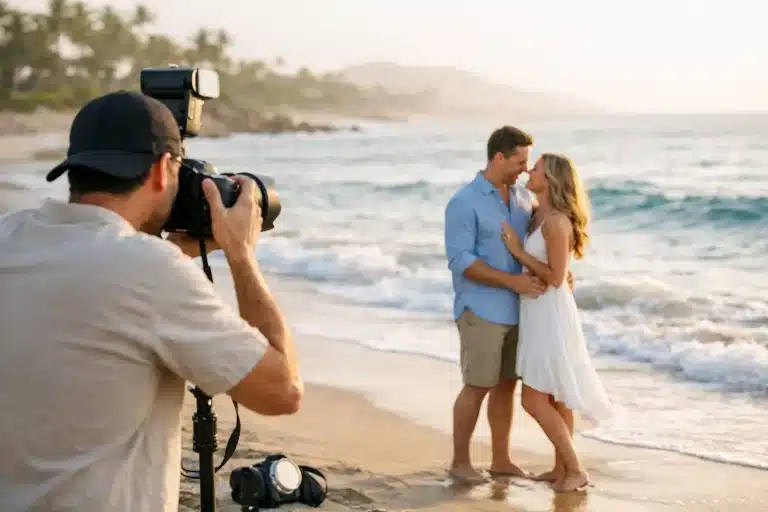
How to Plan a Beach Photo Session
The difference between a beach session that feels easy and one that feels rushed usually comes down to planning. If you’re wondering how to plan a beach photo session, the good news is that you do not need to overcomplicate it. You just need the right timing, a realistic game plan, and a photographer who understands how beaches actually work – not just how they look in photos.
In Naples and Marco Island, beach portraits can be beautiful in a way that feels effortless, but that easy look is usually the result of smart choices made ahead of time. Light changes quickly, tides affect where we can walk and shoot, and families with young kids or grandparents need a session plan that fits real life. When those details are handled well, the session feels relaxed, natural, and fun.
How to plan a beach photo session without stress
The first step is choosing the right day and time. On the Gulf Coast, late afternoon and sunset are usually the best options for portraits. The light is softer, the temperature is more comfortable, and the beach tends to feel calmer than it does in the middle of the day. Midday sessions can work in some situations, but the brighter sun creates harsher shadows, stronger squinting, and fewer flattering angles, especially for family portraits.
If you’re visiting on vacation, it helps to schedule your photo session early in your trip rather than on the last evening. That gives you more flexibility if weather becomes a factor. Florida weather is often beautiful, but it can change fast. A little cloud cover is usually no problem and can actually look great in photos. Lightning, heavy rain, or very strong wind is where backup planning matters.
The right location matters just as much as timing. Not every stretch of sand gives you the same experience. Some beaches are easier for strollers, some are better for larger family groups, and some work especially well for seniors or couples who want a quieter setting. Parking, walking distance, crowd levels, and mobility all affect how smooth the session feels. A beach that looks great online may not be the best fit for a family with toddlers or a multi-generational group.
That is where local experience helps. In Southwest Florida, knowing which access point works best at a certain time of day can save a lot of stress. It also helps create more variety in your gallery, since the best beach sessions usually include more than just standing in front of the water.
Timing, tide, and weather make a big difference
One of the biggest parts of how to plan a beach photo session is understanding that beaches are always changing. The amount of visible sand, the look of the waterline, and how easy it is to move from one area to another can all shift based on tide and weather patterns. That does not mean you need to study tide charts yourself, but it does mean your session should be planned with those variables in mind.
Sunset timing is important, but so is what happens before sunset. The strongest images often happen during the final stretch of daylight, when the sky softens and everyone has had a little time to relax into the session. Starting too late can make the whole experience feel hurried. Starting a bit earlier gives room for candids, group combinations, and the kind of natural movement that helps photos feel genuine.
Wind is another factor people underestimate. A breezy evening can look beautiful and feel comfortable, but very strong wind affects hair, clothing, and how easy it is to keep young children engaged. There is always a balance. Beach photos do not need to look perfectly controlled to be successful, but the best sessions account for conditions instead of fighting them.
What to wear for natural beach portraits
Outfits can make a session look polished without making it feel formal. For most beach portraits, soft colors and lighter neutrals work especially well. Think creams, light blues, soft greens, sandy tones, muted pinks, or gentle patterns used sparingly. These choices photograph well against the natural background and keep the focus on faces and connection.
The main goal is coordination, not exact matching. When everyone wears the same white shirt and khakis, the result can feel dated and stiff. A better approach is choosing a simple color palette and letting each person dress in a way that feels comfortable within it. That is especially helpful for families and larger groups.
Comfort matters more than many people expect. If a dress needs constant adjusting, if a child hates the fabric, or if shoes sink into the sand, it will show in the overall mood of the session. Barefoot is often the easiest option on the beach. For seniors and couples, one polished outfit is usually enough, though some people like to bring a second look if the session timing and location allow for it.
It also helps to think about movement. Dresses that catch a little breeze, shirts that fit well without being too tight, and clothing that allows people to sit, walk, or hold children comfortably all tend to photograph better than overly structured outfits.
Planning for families, couples, and seniors
Every beach session has its own rhythm. A family with small children needs a different plan than a senior portrait session or an anniversary shoot. The best results happen when the session is shaped around the people in it instead of forcing everyone into the same formula.
For families, younger kids are usually happiest when the session feels active and low-pressure. That means keeping expectations realistic, building in some movement, and not treating the entire evening like a test of perfect behavior. Children do best when adults stay relaxed. A good session includes a mix of smiling-at-the-camera images and more candid moments where kids can interact naturally.
For multi-generational families, mobility and pacing deserve extra attention. The beach can be beautiful, but not every access point is equally easy for grandparents or anyone with limited mobility. Planning around shorter walks and stable footing can make a big difference in comfort and confidence.
For couples, the key is usually simplicity. You do not need a long shot list or dramatic posing. What works best is good light, a comfortable location, and direction that helps you connect naturally without feeling staged. Proposal sessions and anniversary portraits benefit from a little extra planning around privacy and timing, especially during busy travel seasons.
For high school seniors, a beach session works best when it feels polished but still personal. Outfit choice, personality, and a little variety in the setting all help. Seniors usually want flattering portraits that look natural, not overly edited or overly posed, and the beach is a strong backdrop for that when the session has a clear plan.
What to bring and what to skip
Most clients do not need to bring much. In fact, overpacking can make the session harder. A towel, a brush, simple touch-up items, water, and anything essential for young children is usually plenty. If you are bringing a second outfit, keep it simple and easy to change into.
It is best to skip bulky bags, extra shoes, and too many accessories. Large items tend to get set down somewhere and become one more thing to manage. The same goes for phones in pockets, heavy watches, or anything that distracts from the relaxed beach look.
If small children are involved, bringing a quiet snack for after the session can be smart. Bribery rarely photographs well, but having something ready for the ride home is often helpful.
The value of leaving room for real moments
The most memorable beach portraits usually are not the ones where every strand of hair is perfectly in place. They are the images where people look like themselves, just in the best light and with a little guidance. That is why planning matters, but so does flexibility.
A strong beach session has structure, but it should never feel rigid. Good planning creates room for spontaneity. It gives space for a child to laugh, for a couple to settle in, for a senior to feel confident, or for a family to enjoy the setting instead of managing chaos.
If you are planning portraits during a Naples or Marco Island visit, working with someone who knows the local beaches can make the whole process much easier. Mark Block Photography focuses on exactly that kind of relaxed, natural beach experience, with guidance that keeps the session smooth from scheduling through final image delivery.
The best way to plan a beach photo session is to keep it thoughtful, not complicated. Choose the right time, dress for comfort and coordination, trust the process, and let the beach do what it does best – give your photos a sense of place that never feels forced.