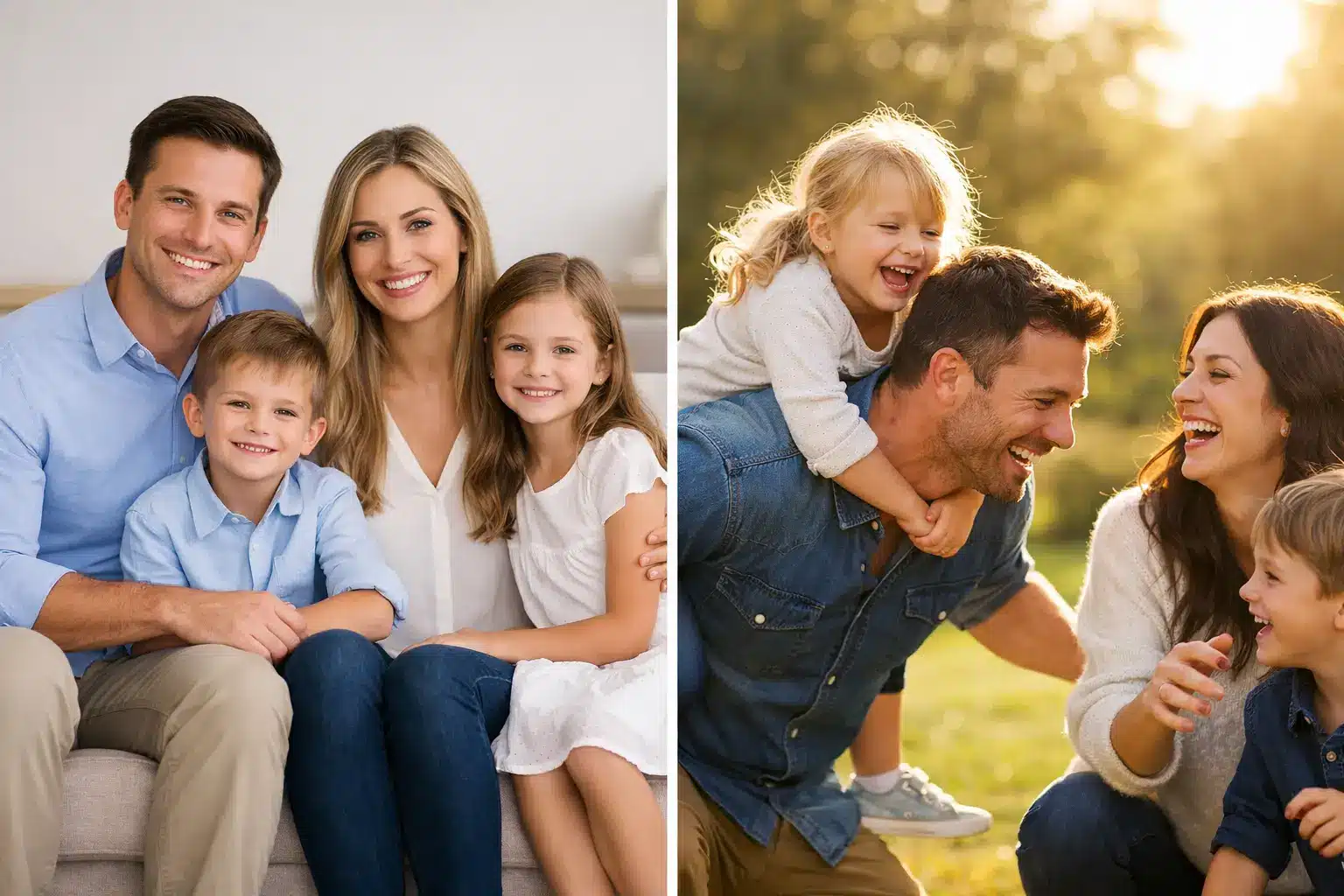
Posed vs Candid Family Photography for You
A family of six has finally made it to the beach together. The grandparents are dressed up, the kids have spotted the water, and sunset is moving faster than anyone expected. This is where posed vs candid family photography becomes less of a style debate and more of a practical question: how do you get a beautiful photo everyone will want to frame while still letting the evening feel like a vacation?
The good news is that you do not have to choose one approach for your Naples or Marco Island family session. The strongest beach galleries usually include both. A few well-directed portraits give you the classic image for holiday cards and grandparents’ walls. Relaxed, in-between moments give the gallery its personality – the toddler’s sandy feet, siblings laughing after a prompt, a couple walking at the waterline.
Choose Your Beach Portrait Session


What Posed Family Photos Actually Mean
Many people hear “posed” and picture stiff smiles, perfectly squared shoulders, and children being asked to sit still far too long. Good posing is not that. It is simple guidance that helps everyone look comfortable, connected, and flattering in the frame.
At the start of a family beach session, a photographer may place the group so faces are in even light, taller family members are positioned naturally, and no one is hidden behind someone else. You may be asked to lean in, put an arm around a child, look toward each other, or shift one step closer. Those small adjustments matter, especially with multi-generational groups where one well-organized portrait can be difficult to recreate later.
Posed images are especially useful when you want a clear record of who was there. For a family reunion, that might mean the full group first, followed by grandparents with grandchildren, each individual family unit, and a few couple or sibling combinations. A little structure keeps those important combinations from being missed.
On a beach, posing also helps make the most of the setting. The sun, shoreline, wind, footprints, and tide all affect where a group can stand comfortably. Direction is not about making people look formal. It is about using the available light and space well so the finished portraits feel polished without looking overworked.
Why Candid Photos Feel So Personal
Candid photos are often the images families did not realize they wanted until they see them. They hold movement and expression: a child reaching for a parent’s hand, a grandmother watching her grandchildren play, siblings laughing at an inside joke, or a couple taking a quiet moment away from the group.
But “candid” does not always mean the photographer disappears and waits for something to happen. With young children, a completely hands-off approach can leave you with children looking away, adults wondering what to do, and a lot of time spent trying to gather everyone back together. The most natural-looking moments often come from gentle prompts.
A photographer might ask your family to walk slowly toward the water, tell the kids to squeeze in close, or have everyone look at the person who is most likely to make them laugh. Once the group has something easy to do, real reactions have room to happen. The photo feels spontaneous because the connection is real, even if the moment was lightly guided.
Candid images are particularly valuable during a vacation session because they preserve how the trip felt. Years from now, the wind in your hair or the way your child held onto your hand at the edge of the Gulf may bring back more than a perfectly arranged pose ever could.
Posed vs Candid Family Photography: The Best Choice Is Usually Both
For most families, the answer is a balanced session rather than one style exclusively. Start with the organized images while everyone is fresh, clothing is clean, and younger children still have patience. Then loosen the structure as the session moves along.
This rhythm works well at sunset. Early in the session, you can create the full-family portrait and the smaller groupings that matter most. Later, when the light gets softer and everyone has settled in, there is more time for walking, interacting, and letting the kids explore safely near the shoreline.
The balance will depend on your group. A family with adult children may enjoy more relaxed prompts and natural movement. A group traveling with grandparents may want a stronger focus on traditional portraits, plus a few candid moments that show their relationships. Families with toddlers generally benefit from short, efficient posed setups followed by plenty of room to move.
There is no need to arrive with a strict rule that every image must be candid or every image must be perfectly posed. Share what matters most to you, then let the session adapt to the people in front of the camera.
How to Get Natural-Looking Posed Photos
The most flattering posed photos do not require you to perform for the camera. They require a few practical choices before and during the session.
Choose clothing that feels coordinated rather than identical. Soft coastal colors, comfortable fabrics, and outfits that allow children to sit, walk, and be picked up tend to photograph beautifully. If someone feels restricted or overly dressed up, that discomfort often shows before the camera even comes out.
Give children a simple explanation ahead of time. Let them know they will take a few pictures, then get to walk, play, or look for shells. Avoid making the session sound like a test of good behavior. A calm parent usually leads to a calmer child.
Once you are in position, focus on your family instead of trying to hold a fixed smile. Look at your children. Put your arms around your partner. Stand close enough that the group feels connected. If the photographer adjusts your hand, chin, or stance, it is simply to make a small improvement in the image, not because you are doing anything wrong.
And when the wind picks up or a child needs a quick break, let it happen. Beach sessions have a little unpredictability built in. The goal is not perfection. It is a photo that feels like your family on a very good day together.
What to Tell Your Photographer Before the Session
A short conversation before your session can make the experience smoother. Mention any must-have groupings, mobility concerns, very young children, or family members who are nervous about being photographed. If a grandparent cannot walk easily on soft sand, that affects location and timing. If a child has a favorite joke, song, or character, that can be surprisingly helpful when it is time for a smile.
It also helps to be honest about your preference. Some clients want a classic portrait where everyone looks at the camera. Others care most about images that feel unplanned and emotional. Most want both, but with a little more emphasis on one side. There is no wrong answer, and clear expectations help shape the session around your priorities.
For vacationing families, timing matters just as much as style. Sunset offers flattering light, but it also means planning around dinner, nap schedules, traffic, weather, and the tide. Arriving a few minutes early gives everyone time to settle in instead of beginning the session rushed.
A Beach Session Should Not Feel Like a Photo Shoot All Evening
The best family portraits have intention behind them, even when they look effortless. Posed images provide the dependable, everyone-together photographs that are hard to coordinate on your own. Candid images bring back the warmth, humor, and movement that make those people your family.
At Mark Block Photography, the approach is to guide you enough that you never have to wonder what to do, then leave room for the moments that cannot be scripted. Bring the people you love, allow a little room for sandy feet and imperfect hair, and let the beach do the rest.