
What to Wear for Beach Portraits
The fastest way to make beach photos feel effortless is to wear something you can actually move in. When families ask what to wear for beach portraits, they usually expect a list of colors and outfit rules. Those matter, but comfort matters just as much. If you’re tugging at a dress, adjusting a shirt collar, or telling kids to stop complaining about itchy clothes, it shows in the photos.
Beach sessions in Naples and Marco Island work best when clothing feels relaxed, light, and natural. The setting already does a lot of the visual work for you. Soft sand, open sky, sea oats, and warm evening light create a clean backdrop, so your outfits do not need to be complicated to look polished.
What to wear for beach portraits starts with comfort
A beach portrait session is not the same as dressing for a ballroom or a holiday party. You may be walking through soft sand, carrying shoes, holding kids, or standing near the waterline. That means stiff fabrics, tight waistbands, and anything that needs constant fixing can become a problem quickly.
Lightweight materials usually photograph best because they move naturally in the breeze. Cotton blends, linen, gauze, rayon, and soft dresses with some flow all tend to work well. For men and boys, breathable button-downs, polos, or well-fitted casual shirts usually look better than heavy formalwear. For women and girls, dresses with soft movement often photograph beautifully, but a comfortable blouse and skirt or simple top with well-fitted pants can work just as well.
If an outfit looks great on a hanger but feels fussy in real life, it is probably not the right choice for the beach.
Choose colors that work with the beach, not against it
The beach in Southwest Florida is full of soft, reflective tones. Cream, tan, pale blue, soft green, blush, dusty rose, light lavender, and muted neutrals usually blend beautifully with the surroundings. These shades keep the attention on faces and connection instead of pulling the eye straight to the clothing.
Bright neon colors, very bold patterns, and harsh contrasts can overpower a beach setting. Pure black can sometimes feel heavy, especially in warm-weather portraits, and bright white can be tricky if the fabric is thin or overly reflective. That does not mean you need to avoid dark or white clothing completely. It just means balance matters. A soft off-white, sand tone, or light blue often feels more natural than stark white or deep black from head to toe.
For groups, the goal is coordination, not matching. Everyone wearing the exact same white shirt and khakis tends to look dated and a little flat. A better approach is to choose a shared color palette and let each person wear something that fits their age, shape, and style.
Good color combinations for families
A family group usually looks strongest when the outfits feel connected but not identical. Soft blues, creams, and khakis are classic for a reason. Sage, tan, and ivory also work beautifully. If you want a little more warmth, muted coral, dusty rose, or soft peach can be great accents without feeling loud.
For larger family groups, especially multi-generational sessions, it helps to build around two or three main colors and keep the rest neutral. That keeps the overall look clean in both full group portraits and smaller breakouts.
Dress for movement and wind
Beach portraits are rarely completely still. Hair moves, dresses catch the breeze, kids run, couples walk, and families shift naturally between posed and candid moments. Outfits that move a little tend to photograph better than outfits that feel rigid.
That said, there is a balance. A long dress can look beautiful in motion, but if it is too long, too sheer, or difficult to walk in on sand, it may create more stress than style. The same goes for shirts that billow too much or pants that wrinkle heavily after a few minutes outside. If you have to choose between dramatic and easy, easy usually wins.
This is also where fit matters. Clothing does not need to be tight to be flattering, but oversized pieces can sometimes look shapeless in wind. Well-fitting, breathable clothing tends to photograph best because it keeps clean lines while still feeling comfortable.
Shoes are optional, and often better left behind
Most beach sessions look best barefoot. It fits the setting, it keeps things casual, and it saves you from sinking heels or sandy dress shoes. Bare feet also help people relax, especially kids.
If you want footwear for a few images before stepping into the sand, simple sandals are usually the easiest choice. Just avoid athletic sneakers, bulky shoes, or anything with a heavy sole that feels out of place on the beach. For seniors or couples who want a slightly dressier look, clean neutral sandals can still feel natural without looking too formal.
What families should wear for beach portraits
Families do best when everyone looks like they belong together without looking copied and pasted. Start with one outfit you love, often mom’s dress or a daughter’s dress, then build the rest of the group around those tones. This tends to be easier than trying to pick five or six outfits separately.
For young children, choose clothes that are soft and easy to move in. Little boys usually do well in a lightweight button-down or polo with rolled sleeves and shorts or light pants. Little girls often photograph beautifully in simple dresses with subtle texture or gentle movement. Avoid clothing with large logos, cartoon graphics, or distracting text.
If grandparents are joining, keep their outfits in the same palette and lean toward simple, classic pieces. Multi-generational portraits feel strongest when no one person is visually competing with the group.
Choose Your Beach Portrait Session


A note about toddlers and babies
For very young kids, comfort is everything. Scratchy tulle, stiff collars, and outfits that need constant straightening can wear them out fast. Soft rompers, simple dresses, or easy sets in light colors usually work best. It is also smart to bring a backup outfit if a child is likely to get sandy or wet early in the session.
What couples should wear for beach portraits
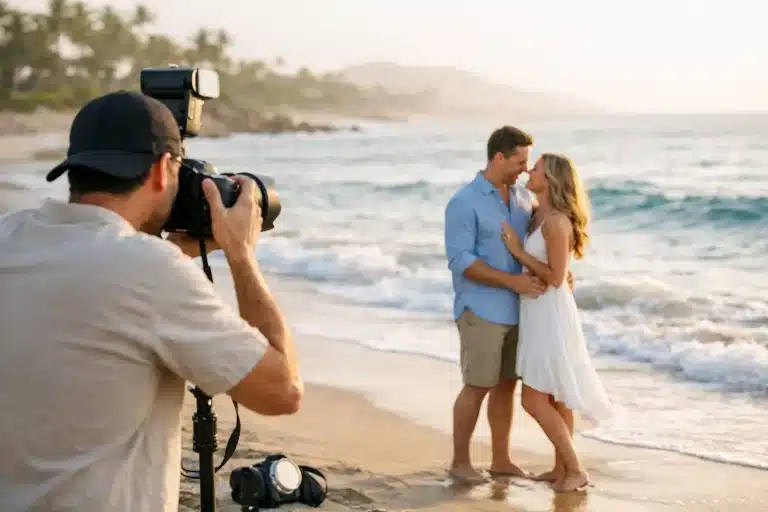
Couples usually photograph best in outfits that feel polished but still natural for the location. Think date-night relaxed, not formal event. A flowy dress paired with a casual button-down and rolled sleeves often works well. So does a simple midi dress with a fitted polo or clean linen shirt.
The biggest thing is making sure your outfits match each other in formality. If one person is dressed for a sunset dinner and the other looks ready for a backyard barbecue, the difference will show. Aim for the same overall level of dressiness, even if your styles are different.
Texture can add a lot here. Linen, soft cotton, eyelet, or subtle woven fabrics give dimension without distracting from the connection between you.
What seniors should wear for beach portraits
High school seniors usually want portraits that feel polished, flattering, and still like them. The beach is a great place for that because it can support both casual and slightly dressier looks in the same session.
For senior girls, dresses, jumpsuits, and well-styled two-piece outfits often work beautifully, especially in soft or muted tones. For senior guys, a clean button-down, fitted polo, or lightweight sweater over a collared shirt can all photograph well depending on the season and their style. The key is to avoid anything overly trendy that might feel dated quickly.
It is often a good idea to bring two outfit options if your session allows for it. One can be a little more dressed up and one more casual. That gives variety in the final gallery without making the session feel complicated.
A few things to avoid
Some clothing choices create problems on the beach even if they seem fine at home. Tiny stripes and busy patterns can distract in photos. Large logos pull attention away from faces. Very short dresses can be hard to manage in the wind. Thick fabrics can look and feel too heavy for the setting.
Spray tans that are much darker than your natural skin tone can also photograph unevenly in bright coastal light. The same goes for clothing that is overly sheer once backlit by the sun. It helps to try everything on in natural light before your session rather than making decisions in a hotel room at the last minute.
Plan for your session time and location
What works at one beach can feel a little different at another, and timing matters too. Sunset sessions in Naples and Marco Island usually favor soft, lighter palettes because the evening light is warm and flattering. If your session includes dunes, boardwalks, or more walking, comfort becomes even more important.
This is one reason local guidance helps. Mark Block Photography works with beach light, wind, and location flow all the time, so outfit choices are not just about style. They are about how the session will actually feel while you are in it.
If you are unsure between two outfits, pick the one that lets you breathe, walk, sit, and hold the people you love without thinking about your clothes every few seconds. That kind of ease always comes through in the final images.
The best outfit for beach portraits is the one that feels like a polished version of you and fits the setting naturally. If you keep it comfortable, coordinated, and easy to move in, your photos will look less staged and more like the moment you wanted to remember.
Let’s Capture Your Family
Let’s turn your precious moments into soulful portraits




3 Comments
Comments are closed.