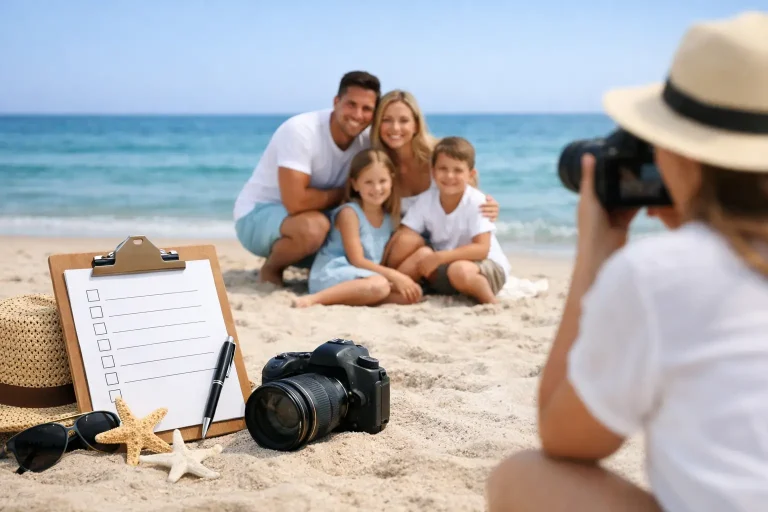
A Family Reunion Photo Example for Beach Groups
A good family reunion photo example is not just one large group lined up and smiling at the camera. It is a collection of portraits that shows who made the trip, how the generations connect, and the fun of being together in a place worth remembering. On a Naples or Marco Island beach, that can mean a polished full-group portrait at sunset, grandparents surrounded by grandchildren, sibling families together, and a few candid moments in between.
The best reunion sessions feel organized without feeling rushed. That balance matters when you are coordinating a group that may include toddlers with short attention spans, grandparents who prefer a short walk, relatives arriving from different hotels, and family members who would rather not spend their vacation posing for an hour.
What a Family Reunion Photo Example Includes
Imagine a three-generation family meeting in Naples for a summer week. There are 16 people: grandparents, their three adult children and spouses, plus seven grandchildren ranging from age two to fourteen. They choose an early-evening beach session, when the sand has cooled, the sun is lower, and everyone can gather before dinner.
The session begins with the complete family portrait. This is the image most people picture when they search for a family reunion photo example: grandparents seated or comfortably centered, adult children close beside them, and grandchildren arranged where they can be seen naturally. The goal is not a rigid school-photo lineup. It is a balanced, connected image where every face is clear and the beach frames the family rather than distracting from them.
Once that essential photo is complete, the group breaks into smaller combinations. Grandparents get a portrait with all the grandchildren, then one with each individual family. Each sibling family gets its own updated portrait, which is often especially meaningful for relatives who live in different states and rarely have everyone together. Couples can step in for a quick photo while children take a breath, and cousins can have a playful, less formal picture near the waterline.
By the end, the family has both the classic image for holiday cards or a framed print and the in-between photographs that tend to become favorites: a grandfather holding a young child’s hand, siblings laughing as they walk down the shoreline, or cousins gathered around a sandcastle.
Choose Your Beach Portrait Session


Why Beach Reunion Portraits Need a Simple Plan
A beach gives a reunion portrait room to breathe, but it also has real logistics. Wind can change hairstyles quickly. Tides affect how much dry sand is available. Bright midday sun can create squinting and strong shadows, while late light is gentler and more flattering. A photographer familiar with the area can choose a location and start time that work with the season, the group size, and the mobility needs of the family.
For larger groups, it helps to have one family member serve as the point person. They do not need to manage every detail. They simply confirm where everyone should meet, encourage people to arrive a few minutes early, and let the photographer know about family relationships that may not be obvious. That small bit of preparation prevents awkward guesswork when it is time to organize different family combinations.
It also helps to be realistic about how long young children can stay engaged. The full group should be photographed early, before attention wanders and before anyone decides to take off their shoes and run toward the water. After that, smaller groups and candid movement are easier to keep lighthearted.
Start With the Portrait Everyone Will Want
The full reunion photo is the priority because it is the hardest image to recreate. Even if the group is only together for a weekend, a clear, well-composed portrait gives everyone something lasting to take home.
For a large group, the most comfortable arrangement usually places older adults where they can sit or stand steadily, then builds the rest of the family around them. Children do not have to stand perfectly still for every frame. A relaxed photographer can direct them into a close, natural position, take several quick images, and move on before the moment feels like a chore.
Make Room for Smaller Stories
The large group photo is only one part of the gallery. Smaller groupings add the emotional detail that makes a reunion session personal. Grandparents with grandchildren, each household, adult siblings, and cousins are the combinations most families are glad they made time for.
A little flexibility is useful here. If a toddler needs a snack or someone in the group has limited mobility, the order can change. The goal is not to follow a rigid shot list at the expense of the experience. It is to make sure the important people are photographed well while keeping the pace comfortable.
What to Wear for a Coordinated, Natural Look
Matching exactly is not necessary, and it can make a large beach group look more formal than most families want. Coordinating colors works better. Soft blues, sandy neutrals, muted greens, light pinks, and warm earth tones tend to photograph well against Gulf sand and water.
Start with two or three colors and let each household choose clothing within that palette. For example, the grandparents might wear light blue and cream, while everyone else blends in shades of blue, tan, white, and soft coral. Solid colors and subtle patterns are usually easier on the eye than bold logos, neon colors, or several competing prints.
Comfort is part of looking relaxed. Choose clothing that allows children to sit, walk, and be held without constant adjustments. For adults, flowing dresses, linen-blend shirts, simple tops, and breathable fabrics often work well in Florida warmth. Bare feet are a natural fit for a beach session, but sandals are helpful for the walk to and from the meeting spot.
Timing Can Make or Break the Experience
Early morning and the hour before sunset are usually the most comfortable times for beach portraits. The choice depends on the time of year, the group’s schedule, and the ages of the children. Morning can be ideal for families with young kids who are happiest before the day gets busy. Evening offers softer light and a more relaxed vacation feel, but it may conflict with dinner, bedtime, or travel plans.
Weather deserves flexibility, too. Southwest Florida afternoons can bring passing rain, especially in warmer months. A cloudy forecast does not automatically mean poor photos. Light cloud cover can be very flattering, and a brief shower can pass quickly. Safety always comes first, though, particularly when lightning is in the area. Building a little schedule flexibility into a reunion trip can make a reschedule far less stressful.
The Difference Between Posed and Stiff
Families often worry that a professionally guided session will feel overly posed. In reality, gentle direction is what keeps a large group from looking scattered. A photographer may tell you where to stand, where to place a hand, or which direction to turn for better light. Then the connection comes from the way your family naturally responds to one another.
After the formal portraits are covered, movement helps. A short walk along the shoreline, grandparents talking with grandchildren, or cousins holding hands can create images with energy and genuine expression. These moments are guided, but they should never feel like you are acting out a scene.
At Mark Block Photography, the approach is built around that mix of clear direction and a relaxed pace. You do not need to know how to pose or keep every child smiling. You only need to bring your family together and leave room for the real moments to happen.
A reunion may be the one week when everyone is finally in the same place. Choose a session time that works for the people who matter most, start with the group portrait, and let the rest of the evening unfold naturally.