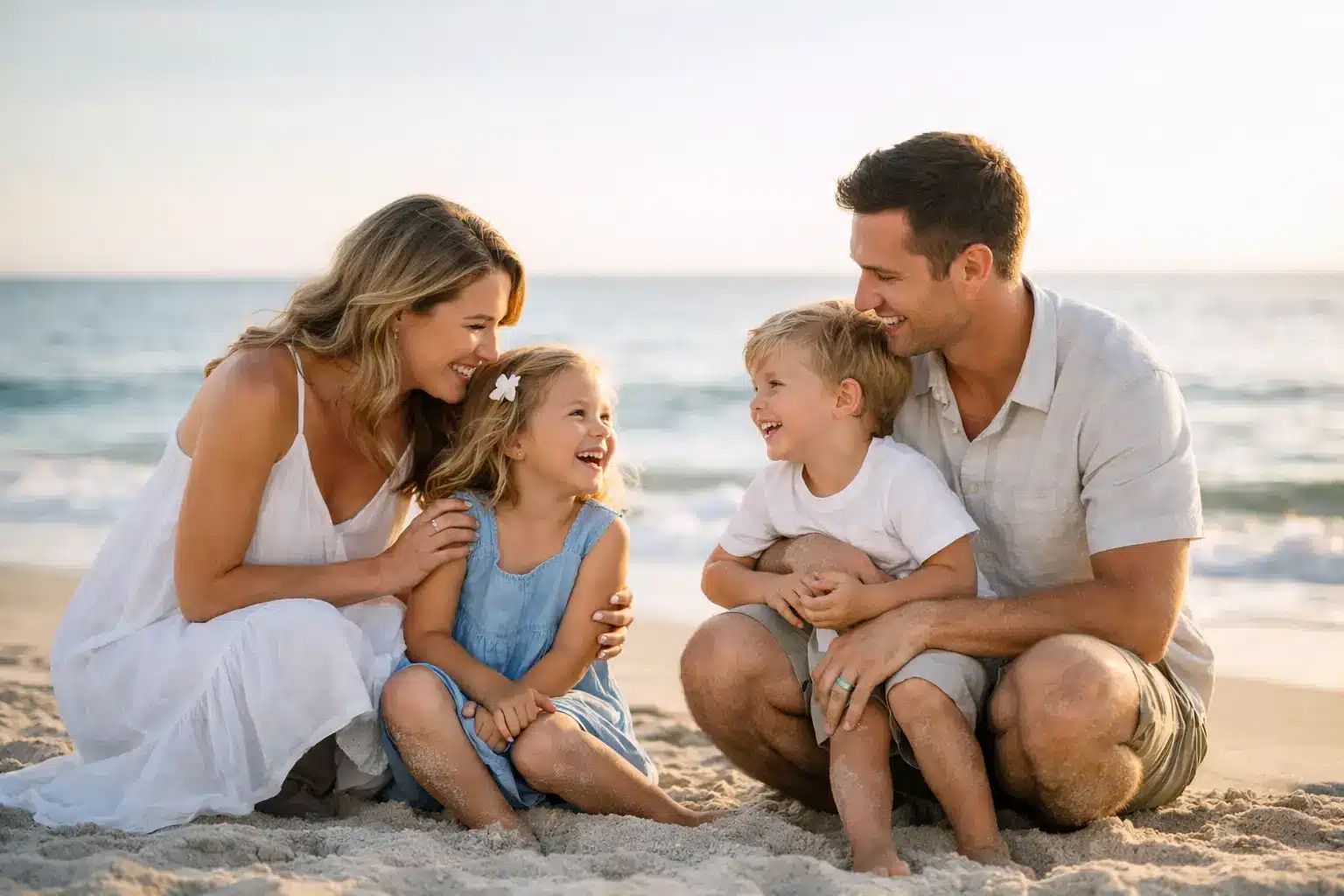
Natural Light Family Photography Tips for Beaches
A Naples beach can look completely different from one hour to the next. The sun may be bright and reflective at midday, then soft and warm near sunset. Wind can lift everyone’s hair, tide can narrow the walking space, and young children may decide the water is far more interesting than the camera. The best natural light family photography tips are less about making everyone stand perfectly still and more about planning for those real conditions so the photos feel relaxed, flattering, and true to your family.
Start With the Right Time of Day
For most outdoor family sessions in Naples and Marco Island, the hour before sunset is a favorite for good reason. The light is lower, softer, and more directional than it is in the middle of the day. Skin tones tend to look more even, the water and sky take on richer color, and families are not squinting into a high Florida sun.
That said, sunset is not the only workable option. Morning sessions can be a smart choice for families with younger children who are happiest early in the day. Beaches are often quieter, the temperature may be more comfortable, and the light can still be gentle. If a child is normally tired or overstimulated by late afternoon, a beautiful morning session is usually better than forcing a sunset time that does not fit your family’s routine.
Midday is the most challenging window for portraits because overhead sun creates strong shadows under eyes and chins. It can still work in limited shade or when a schedule leaves no alternative, but the look will be different. If soft, natural beach portraits are the priority, build your vacation plans around a morning or evening session when possible.
Let the Light Guide the Posing
Natural light is not simply a background detail. It affects where a photographer places your family, how close everyone stands, and which direction you face. At the beach, placing the sun behind or slightly to the side of a group often creates a softer, more flattering result than facing directly into it. It also allows the sky, sand, and water to remain part of the image without harsh squinting.
You do not need to know where to stand before you arrive. A photographer familiar with Southwest Florida beaches will watch the changing light and guide you into the best available spot. One part of the session may happen near the dunes, where the light is more protected. Another may move closer to the shoreline for open sky and movement. The goal is variety without turning the session into a long hike across the sand.
Keep Faces Close and Bodies Connected
Natural-looking family photos usually come from connection, not complicated poses. Standing shoulder to shoulder with a little space between each person can look formal and disconnected, especially in a wide beach setting. Instead, parents can hold a child’s hand, pull everyone in close, or walk together along the waterline.
For a multi-generational group, start with a clean, well-organized portrait while everyone is fresh. Then break into smaller combinations: grandparents with grandchildren, siblings together, each family unit, and couples. These groupings create meaningful images while keeping the pace manageable for kids and older relatives.
A good photographer will give simple direction, then leave room for natural reactions. You may be asked to look at each other, tell a child something silly, or take a short walk rather than stare at the camera for every frame. Those in-between moments often become the images families love most.
Choose Outfits That Work With Beach Light
What you wear has a real effect on how natural light photographs. Light neutrals, soft blues, muted greens, warm sand tones, and gentle pastels generally work well against the beach without competing with the scenery. These colors also reflect light softly onto faces.
The key is coordination, not matching everyone exactly. Choose a loose color palette, then let each person wear something that feels comfortable and like them. A mother in a flowing dress, a father in a breathable button-down or polo, and children in simple solid colors can look polished without feeling overly styled.
Very bright neon shades, large logos, and busy patterns can pull attention away from faces. Pure white can be beautiful in the right light, but mixing in cream, tan, blue, or soft color usually adds more depth to the group. For evening sessions, consider that the beach can feel breezy after the sun drops. A light layer for children may be useful, especially if the session runs close to sunset.
Comfort matters just as much as color. Shoes that sink into sand, outfits that need constant adjusting, or clothing that makes a child feel unlike themselves can show up in the final expressions. Bare feet are often the simplest choice for a beach session.
Plan for Wind, Tide, and Real Life
Florida beach sessions are outdoors, which means a little flexibility goes a long way. Wind is common near the coast, particularly later in the day. It can add life and movement to photographs, but it helps to plan accordingly. If anyone has long hair, consider bringing a brush and hair ties. Avoid relying on hairstyles that need to stay perfectly smooth in every image.
Tide is another local detail that affects a session. At higher tide, there may be less open sand, more shells near the waterline, or a different route onto the beach. This does not mean the photos will be less beautiful. It simply changes the best locations and poses. Working with someone who understands local access points and beach conditions saves time and keeps the experience easier for everyone.
Bring only what you truly need. Water, a small towel, wipes for children, and a quick snack can be helpful. Large beach bags, extra toys, and bulky items can become distractions unless they are part of the plan. If toddlers need a favorite stuffed animal or a small comfort item for the first few minutes, that is completely fine. Often, once they are settled, it can be set aside.
Set Children Up for a Better Session
Children do not need to behave like tiny adults for family photos to work. They need a little patience, a calm pace, and permission to move. Telling them in advance that they will get to play near the beach after a few pictures can help, but avoid building the session up as a high-pressure event.
Try to schedule around naps and meals when you can. A hungry toddler at sunset may not care how pretty the sky looks. Bring a non-messy snack, arrive with enough time to park and walk to the beach without rushing, and let the photographer know if a child is shy, energetic, or needs a little extra time to warm up.
The same approach applies to teens. They generally do best with clear, low-key direction rather than repeated instructions to smile. Give them room to be themselves, and the expressions will look more genuine.
Trust the Weather Plan
Clouds do not automatically mean disappointing photos. In fact, a lightly overcast evening can create beautifully even light and softer color. The concern is not a cloudy sky by itself, but active rain, unsafe conditions, or wind strong enough to make the beach uncomfortable.
Avoid making a weather decision too early. Florida forecasts can shift quickly, and conditions near the coast may differ from what an app predicted that morning. A local photographer will monitor the forecast, communicate clearly, and help determine whether waiting, adjusting the time, or rescheduling is the best call.
If your trip schedule is flexible, consider booking your portrait session earlier in your stay. That gives you more options if weather requires a change. It is one of the simplest ways to protect an important vacation photo session from a rainy evening.
Focus on the Experience, Not a Perfect Performance
The most useful natural light family photography tips come down to this: give yourselves enough time, wear clothes you can move in, and let the beach be part of the experience. Sandy toes, a child laughing while running toward a parent, a couple pausing at the edge of the water – these are not interruptions to the session. They are often the reason the photographs feel personal.
At Mark Block Photography, the direction is designed to keep things moving while still leaving space for those unplanned moments. You do not have to know how to pose or manage every detail. Arrive ready to be together, and let the light, the shoreline, and a little local guidance do the rest.


